Service overview
Floral services and how they are structured
Services are grouped into a small, focused set so clients can match needs to clear formats
without sorting through a long catalogue. Ready-made bouquets handle most gifts and small
gestures, custom work covers events and one-off projects, ongoing support is available for
offices and venues, and time-sensitive orders are assessed honestly against real capacity.
Each service uses the same internal method, which balances design with logistics and direct
communication.
Ready-made bouquets for key occasions
Structured options
Ready-made bouquets are structured designs built from tested recipes that balance
stem quality, colour control, and transport behaviour. Clients choose from a defined
set of palettes, sizes, and wrapping styles that cover common occasions such as
birthdays, anniversaries, and simple thank you gestures. Within each option, the
team adjusts stems according to season and supply while keeping to the agreed mood
and value. Orders follow a short briefing that confirms date, address, and any
sensitivities, then move into production using the studio’s conditioning routines.
Delivery is planned around realistic routes, and each bouquet includes
straightforward care notes explaining trimming, water, and placement. Results may
vary, but this format is designed to keep decisions fast and outcomes consistent.
- Defined palettes and sizes make selection quick while keeping designs controlled.
- Recipes are adapted to current supply so quality is protected without long delays.
- Delivery windows are matched to routes, not squeezed, to protect bouquet condition.
Custom bouquets and compositions
Tailored pieces
Custom bouquets and one-off compositions are built when the standard range does not
fit, such as for specific interiors, unusual venues, or detailed briefs. The studio
still works from constraints first, asking for room photos, colour references, and
timing details before sketching formats. Designs might involve mono-flower
statements, asymmetrical arrangements, or mixed sets across several surfaces, but
all are kept within a disciplined aesthetic and practical mechanics. Clients receive
a concise proposal showing key pieces, palette direction, and indicative sizing
rather than a long speculative deck. Once confirmed, materials are sourced with
behaviour and availability in mind, and any critical dependencies on rare stems are
discussed openly to avoid unrealistic expectations.
- Short, focused briefing turns loose ideas into clear design constraints.
- Proposals show key pieces and palettes instead of complex presentations.
- Stem choices prioritise behaviour and availability alongside appearance.
Floral design for weddings and events
Event decor
Event floral design and on-site decor support are offered for weddings, corporate
functions, and cultural gatherings where multiple compositions must work together.
The studio applies its three-step method: define zones, set palettes, and select
formats, then maps each piece to a specific table, entrance, or stage area. Low
centerpieces, runners, focal installations, and bar arrangements are all treated as
parts of one system, built with mechanics tested for transport and venue conditions.
Timelines are planned backward from event start, factoring in load-in windows,
coordination with other suppliers, and any teardown or re-use plans. The focus is on
calm, predictable setups rather than last-minute reinvention, with any necessary
on-the-day adjustments discussed with the main contact when time allows.
- Zones, palettes, and formats are defined early to keep the room coherent.
- Mechanics and logistics are matched to venue access and event timing.
- Post-event feedback is used to refine future projects with the same client.
Corporate flowers and time-sensitive orders
Ongoing and urgent
Corporate flower subscriptions and time-sensitive orders for offices, hospitality
spaces, and select urgent needs are managed under clear rules. For recurring work,
the studio documents a small library of recipes aligned with brand colours and
interiors, then sets a rotation schedule that balances visual change with
operational stability. Deliveries are timed around staff flow and access rules, with
containers swapped to minimise disruption. For urgent or last-minute requests, the
team assesses feasibility against current stock, routes, and staffing, and gives a
direct answer rather than optimistic guesses. When possible, a simplified format or
adjusted timing is proposed; when not, the studio explains why and may suggest the
nearest workable alternative.
- Office and hospitality clients receive repeatable, documented floral formats.
- Rotations are planned to fit building routines and reduce disruption.
- Urgent requests are evaluated honestly against capacity and stock limits.
How floral services are delivered
All services share the same backbone: a clear brief, a structured plan, disciplined production, and delivery that respects logistics. This reduces noise for clients and lets the team focus on execution instead of constant reinvention.
01
Define constraints with a focused brief
Every service starts with a short, structured briefing that captures the essentials:
occasion type, date, venue or delivery address, budget range, and any constraints
such as sensitivities, brand colours, or access rules. For events and corporate
work, the studio may request floor plans or photos to understand table sizes,
sightlines, and traffic paths. This information is treated as the fixed frame for
all later decisions, which keeps expectations grounded and avoids speculative design
work that does not fit the real context.
02
Translate needs into a structured plan
Using the briefing, the team applies its internal three-step method: map zones, set palettes, and select formats. Zones cover where flowers will appear, such as entrance, tables, or reception desks. Palettes are kept to controlled ranges rather than open-ended lists, and formats describe bouquet sizes or composition types with indicative dimensions. The result is a concise proposal that shows how flowers will function in the space, how many pieces are needed, and how they align with the budget band and timing window.
03
Prepare flowers and build each piece
Once the plan is confirmed, the studio schedules sourcing, conditioning, and
production. Stems are ordered with quality and behaviour in mind, then processed
using consistent routines for hydration and storage. Recipes for each piece are
documented just enough to guide design without turning work into rigid assembly.
Mechanics and wrapping are chosen for stability in transport and on site. If a quick
photo check is agreed for key items, it is shared within a defined time frame so
delivery is not delayed.
04
Deliver, install, and hand over
On the agreed date, deliveries and setups follow a planned route that matches venue
access, building rules, and realistic travel times. Bouquets are packed to protect
stems and shapes, while compositions are transported in containers or crates sized
to their bases. On site, arrangements are placed according to the map created
earlier, then checked from guest and camera viewpoints. Care notes and simple
instructions are left where flowers will remain after the team departs, with a
reminder that results may vary depending on handling and conditions.
05
Review outcomes and refine methods
After larger events and ongoing corporate work, the studio collects feedback on what
worked and what did not: stem performance, placement, guest reactions, and any
timing issues. These observations are added to internal notes and used to refine
recipes, mechanics, and planning templates. Over time, this feedback loop makes
services more predictable and better aligned with how spaces are actually used,
rather than how they were imagined on paper.
Why it works
Advantages for events, offices, and repeat floral work
This studio treats every floral service as a repeatable process: clear brief, measured
design, and logistics that match real routes and venues. Event and corporate clients see
the same benefits each time.
Clear communication at every stage
For events, offices, and recurring orders, the main risk is confusion rather
than creativity, so the studio keeps communication short, specific, and written
where it matters. Each project starts with a structured briefing that captures
date, venue, access rules, and budget bands before any stem is discussed. This
avoids late surprises and makes it easier for different stakeholders to align.
Clients know who is responsible for which step, what information is still
missing, and when decisions lock in so logistics can move forward without
last-minute redesigns.
02
Reliability built on checklists
Event and corporate work often spans multiple rooms, deliveries, and handovers,
so the studio uses simple internal checklists instead of relying on memory.
Formats, quantities, and placement notes are documented, then cross-checked
against venue plans and schedules. This reduces the chance of missing pieces,
misplaced arrangements, or timing clashes with other suppliers. The result is
not perfection, but a steady pattern of setups that run calmly and predictably,
even when the calendar is tight or access is awkward.
03
Consistent style across projects
Rather than reinventing style for every order, the studio works within a defined aesthetic: controlled colour stories, balanced shapes, and mechanics tested in real deliveries. Corporate and event clients benefit from this consistency, because repeated orders still feel related and on-brand. When adjustments are needed for a new space or theme, changes are made in measured steps, so the visual language stays coherent while responding to feedback and new requirements.
Practical flexibility within clear limits
Events move, corporate needs evolve, and delivery conditions change, so the
studio keeps processes flexible where it helps and firm where it protects
outcomes. Palette tweaks, quantity shifts, and placement refinements are usually
possible early in the timeline, while mechanics, key recipes, and core logistics
become fixed as the date approaches. This balance means clients can refine plans
without undermining the stability of the final setup or bouquet run.
Continuous refinement from real events
Each season, the team reviews how services performed: which stems behaved well in certain venues, which delivery routes were fragile, and which design formats generated questions. These findings feed into small, documented adjustments to recipes, packaging, and planning templates. Over time, this slow refinement builds a service that behaves more predictably, reduces avoidable stress, and keeps communication grounded in actual experience rather than theory.
Service snapshots
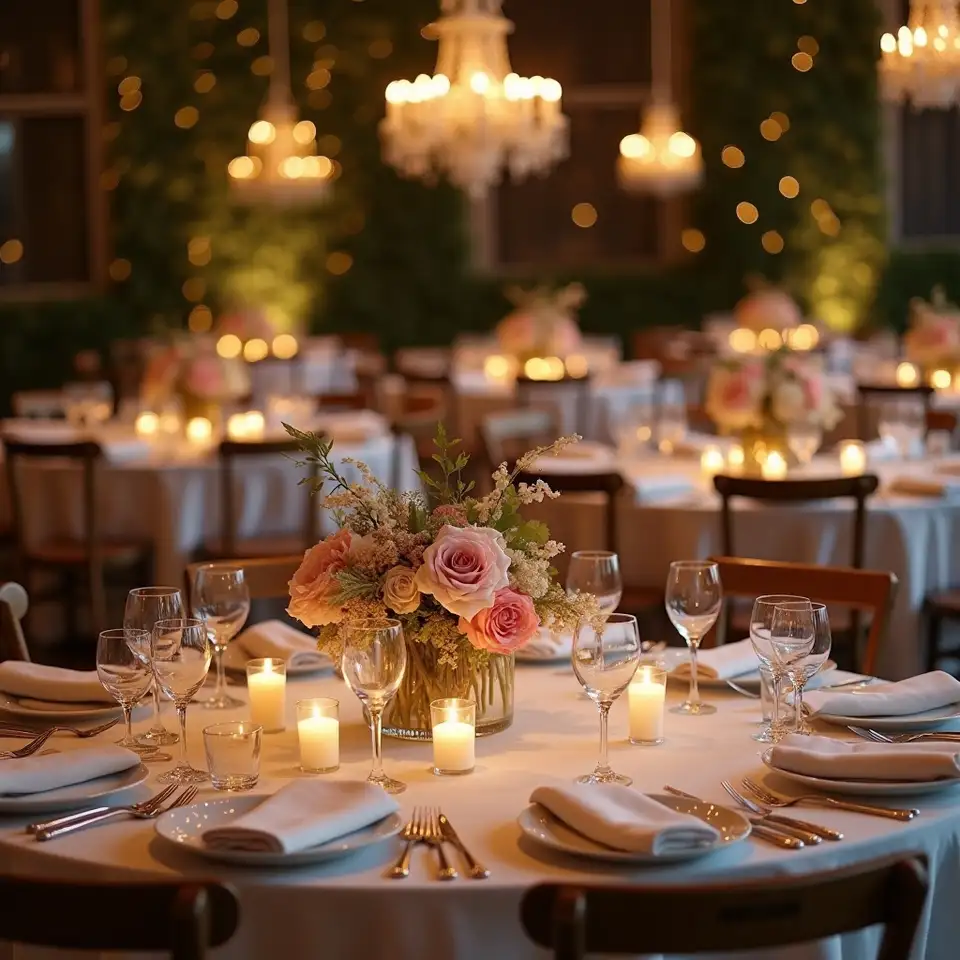
Wedding dinner compositions
A series of low centerpieces and accent arrangements for a wedding dinner in a compact venue, built around calm neutral tones with subtle texture. The studio used its three-step briefing method to map table sizes, guest flow, and access routes before proposing formats. On the day, compositions were transported in shallow crates, placed according to a pre-agreed layout, and checked from seated eye level to protect sightlines. Feedback after the event focused on the quiet look and the fact that staff did not need to move flowers to serve dishes or clear plates, which matched the original brief for functional decor.
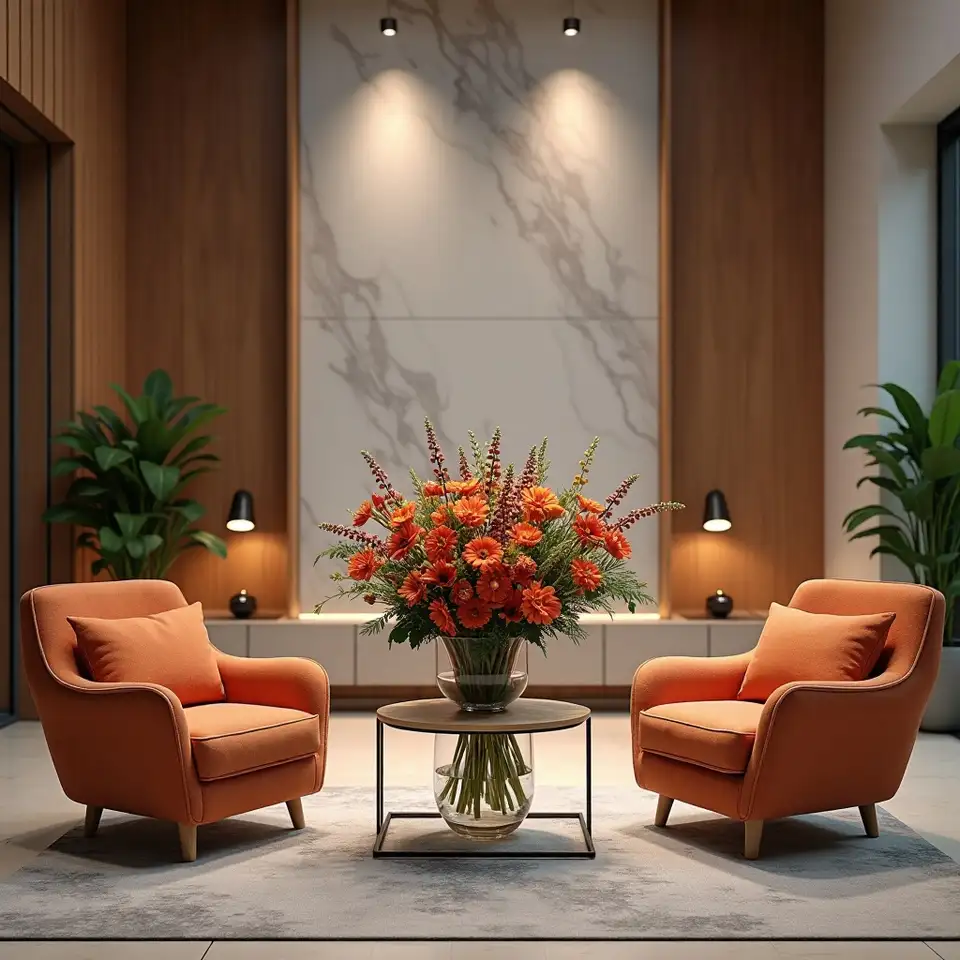
Corporate floral rotation
A corporate client needed a repeatable set of reception and meeting-room arrangements that could be refreshed on a regular schedule without long approvals each time. The studio documented a small library of recipes aligned with the brand palette and interior finishes, then linked each to simple notes on size, placement, and care. Deliveries were planned for quiet times in the office schedule, with containers swapped rather than rebuilt on site. Over several cycles, small adjustments were made based on staff feedback, such as reducing fragrance in certain rooms and tightening height ranges for video calls.
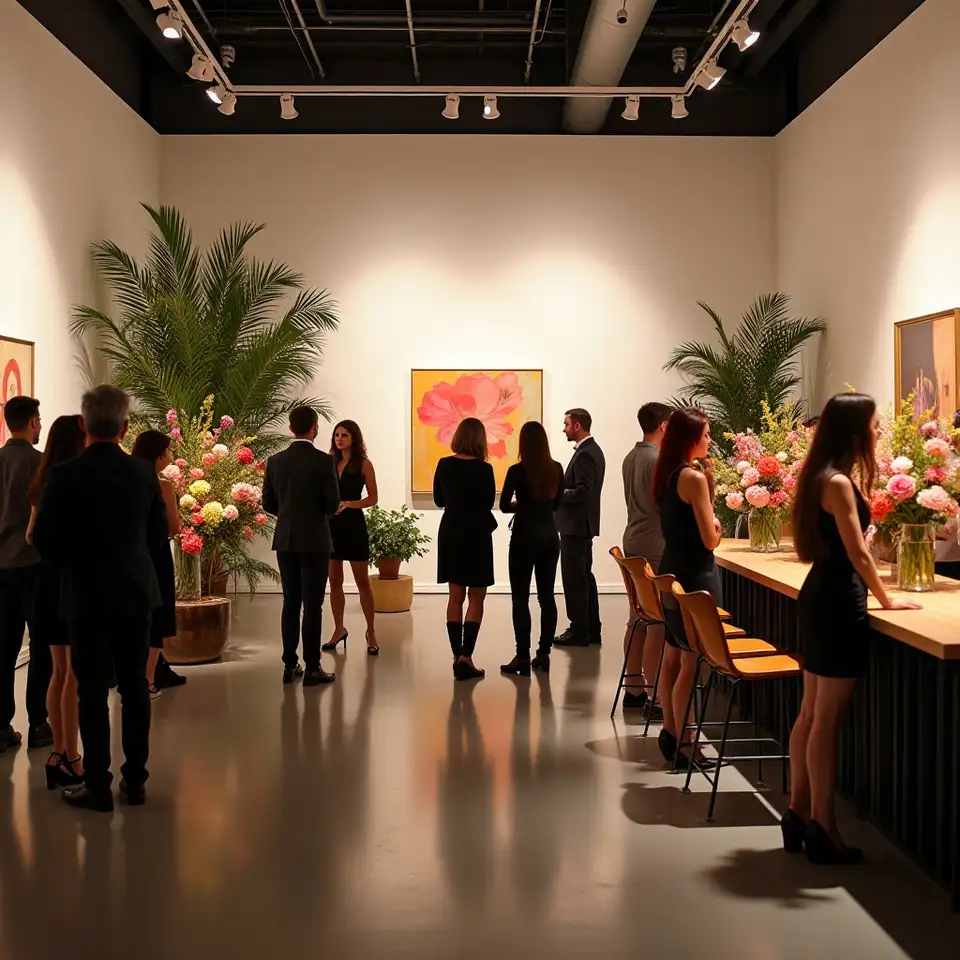
Gallery and cultural event support
For a gallery opening, the studio created an asymmetrical entrance piece, a set of slim plinth arrangements, and a few compact bar compositions. The design brief called for subtle support that would not compete with artworks or strong lighting. Using its structured approach, the team tested mechanics for transport and quick placement, then mapped each piece to a specific pedestal or counter. During installation, flowers were positioned to respect visitor movement and photography angles. After the event, the client noted that the florals framed the space without drawing attention away from the exhibits, which was the core goal.
How early should services be booked
For everyday bouquets, at least one to three days’ notice helps with sourcing and route planning, while larger events and corporate installs work best when booked as soon as the date and venue are fixed. The studio can sometimes help sooner, but only if schedule and stock allow.
Can standard bouquets and sets be customized
Yes, within realistic limits. Clients can adjust palette direction, size, and some stem types, but the studio will flag when requests clash with timing, season, or budget. The goal is to adapt designs without undermining stability or logistics.
Which areas do you cover for delivery and setup
Delivery zones depend on distance, access, and whether setup is needed. The studio focuses on areas it can serve reliably rather than stretching coverage. Exact options are confirmed once the address, date, and timing window are known.
How do you handle substitutions and natural variation
Substitutions are handled by keeping to the agreed palette, structure, and value while changing specific stems if supply or quality demands it. Natural variation and seasonality mean exact replication is not possible, so photos and recipes remain guides, not rigid specifications.
Discuss your next floral project
The most efficient way to see what is realistic for a specific occasion is to outline the basics: date, location, budget range, and whether the need is a bouquet, event decor, or ongoing office work. With that information, the studio can respond with a short set of options, explain any constraints, and suggest a path that respects both timing and space. Use the contact form or phone to share these details in one message, rather than several fragments, so the team can review once and come back with a structured reply. Results may vary, but this approach consistently reduces back-and-forth and keeps expectations aligned from the first conversation.
Get started